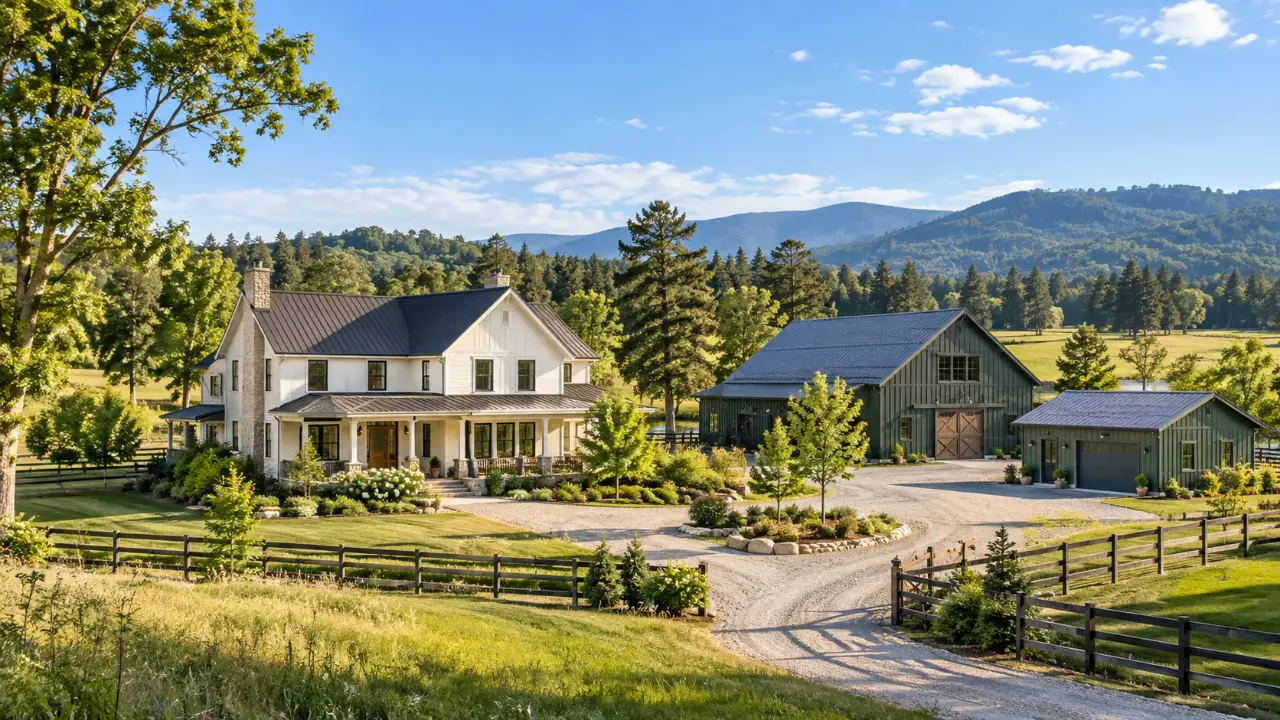
“A house on five acres” can describe very different properties. One might have a garden and a small workshop. Another might include livestock facilities, multiple buildings or land used to produce income. Those differences deserve attention before an appraisal is assigned.
The first step is to describe what is there and how it is used. That helps the lender consider program requirements and the appraiser understand the work involved.
Describe the land beyond its acreage
A parcel’s size is only the beginning. Available documents may explain boundaries, access, easements, utilities, zoning and restrictions. A property with several parcels may require clarification about what is included in the transaction.
Gather what is available without guessing at missing details. If a survey is old or a boundary is uncertain, say so. If access crosses another property, provide the relevant recorded information when available. The aim is a clear starting point, rather than a complete legal assessment by the owner.
Make an inventory of the buildings
List each significant structure separately. A detached garage, storage shed, guest accommodation and working barn should not be compressed into “several outbuildings.”
For each building, useful information may include:
Its current use and approximate size.
Whether it has power, water, heating or plumbing.
Its condition and any known repairs needed.
Available permits or records of conversion.
Whether anyone occupies it or uses it for a business.
Photographs can make the initial description easier to understand, but they do not replace whatever inspection the assignment requires.
Current use matters
A barn’s appearance does not settle how the property should be treated. The lender needs to understand whether the property is residential in nature or presents agricultural or other nonresidential characteristics.
Fannie Mae’s guidance distinguishes between different kinds of outbuildings. It notes that significant farm-related structures can indicate agricultural use and places the determination of residential character with the lender. Its treatment is specific to that program. [1]
Do not assume that a building is acceptable simply because an appraisal assigns little or no value to it. Discuss eligibility with the lender using the applicable loan requirements.
Cost and market contribution are different questions
Owners often know what they spent on a workshop, fence or barn. Keep those records, but avoid assuming that the expenditure will be reflected dollar for dollar in the property’s value.
A useful appraisal question is how the feature affects buyer demand for the whole property. If an improvement seems unusual for the area, ask for an explanation of the evidence supporting its treatment. Construction invoices describe an investment; they do not, by themselves, answer the market question.
Prepare a simple property packet
Before ordering, assemble the listing, available parcel or survey documents, the building inventory, relevant permits and a short description of current use. Identify questions still unresolved, such as the status of a converted building or which parcels are being financed.
That packet gives the lender and appraiser something concrete to work from. It also creates an opportunity to address an eligibility question before time is spent on an assignment that may need a different approach.
Talk to Avisso about the property.
Sources: 1. Fannie Mae Selling Guide: Improvements Section of the Appraisal Report, including Properties with Outbuildings.
General educational information. Property eligibility and appraisal requirements depend on the loan program and assignment.